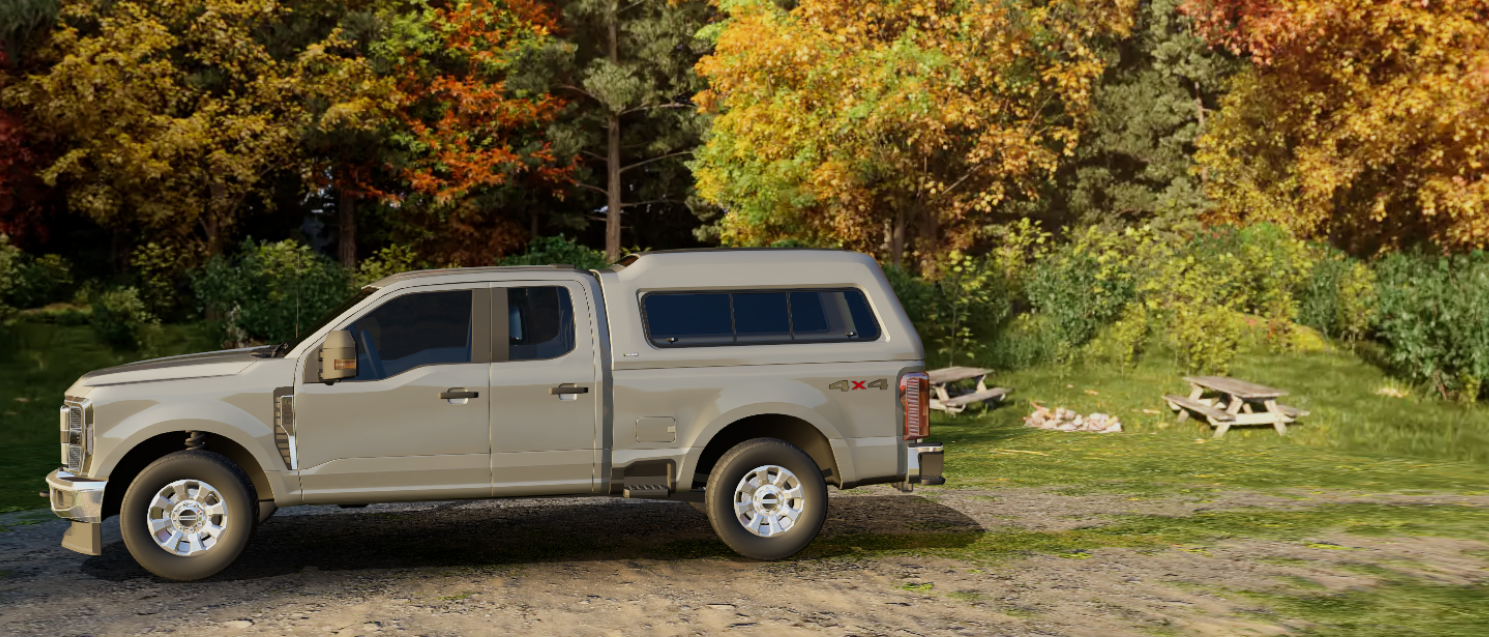
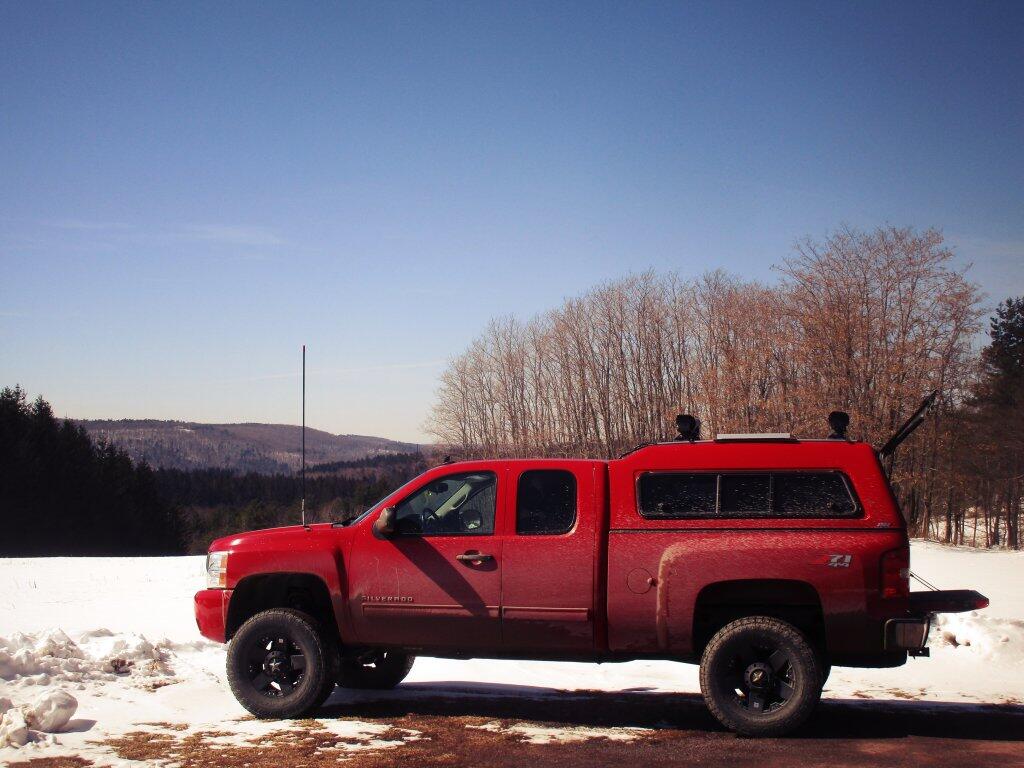
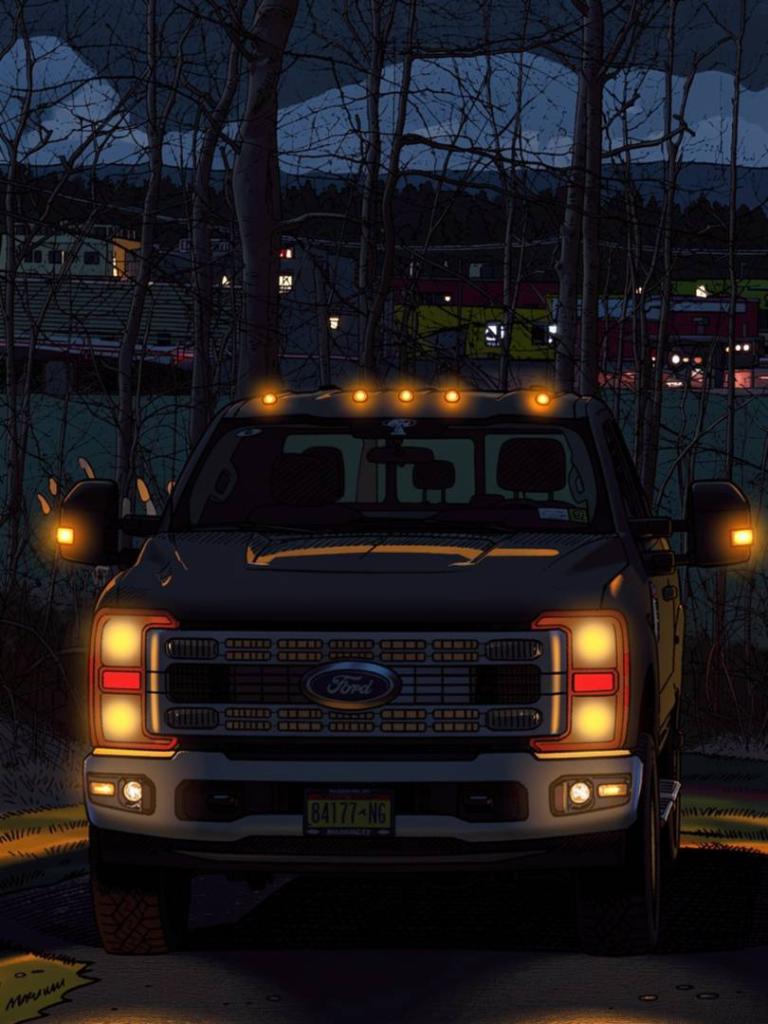
Old Smokey is the nickname I have for my 2026 Ford F-350 SuperDuty which I purchased at the end of March 2026 to replace my former truck, Big Red, a 2011 Chevy Silverado. Why the name Old Smokey? One is it the color is smokey but also it’s the truck that Smokey the Bear drives, at least the latest generation of DEC Forest Ranger trucks tend to be this color gray and built to a similar configuration. Why old? It is a work truck, and while it has some technology, most of the design is tried and true – 6.8L MiniZilla pushrod engine, key ignition, needles for speedometer and all guages, manual climate controls, conventional cruise control.
The Old Smokey truck is a “one-ton” class axle commerical HD pickup truck, extended cab, short bed (6 3/4 foot bed). While the short bed seems small by SuperDuty propotions, it actually is a very good fit for my uses, as it’s long enough to sleep on and camp once I get a camper shell (aka topper or cap) on the truck. It also is reasonably short at 19 1/2 feet, that with the backup camera makes it possible to get into relatively small campsites.
The truck has the FX4 and XL Off Road HD Utility Package, which provides 33-inch Goodyear Wrangler tires, skid plates, specifically tuned off-road shocks, Hill Descent Control, an electronic locking rear differential, a raised air dam for better ground clearance and water-fording vent tubes on the rear axle. It also has dual alternators and batteries, able to supply up to 410 amps of power for camping, and has the upfitter harnasses for additional power and configuraton.
The next step will be ordering the camper shell, moving the solar panel, lead acid batteries, interverter and CB radio to the new truck, and acquiring and installing additional solar panel(s), cellphone booster, and probably a supplemental LiPo battery. By next winter, I also want to add a diesel heater for comfortable winter camping. Stay tuned, as they say. It’s going to be a great rig.
Is when I hit the key fob to unlock the doors on the SuperDuty after it's been parked for a few days the height and mirror lights don't come on to save battery power. This disappoints me as a big kid I like looking at the roof lights in the dark.
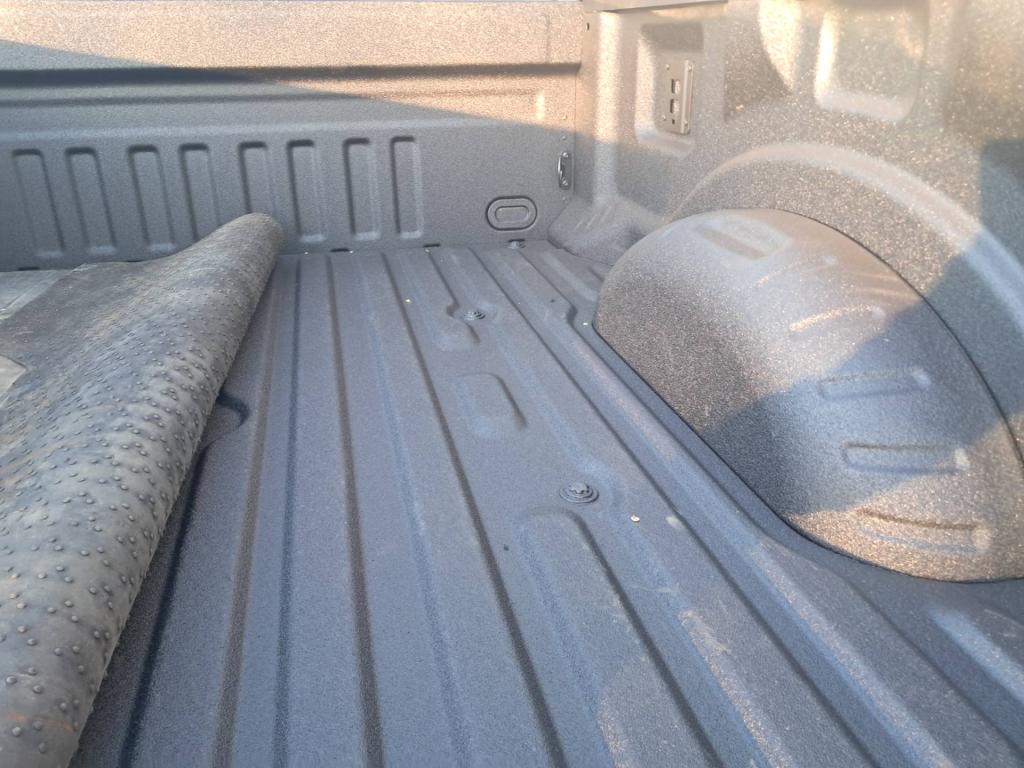
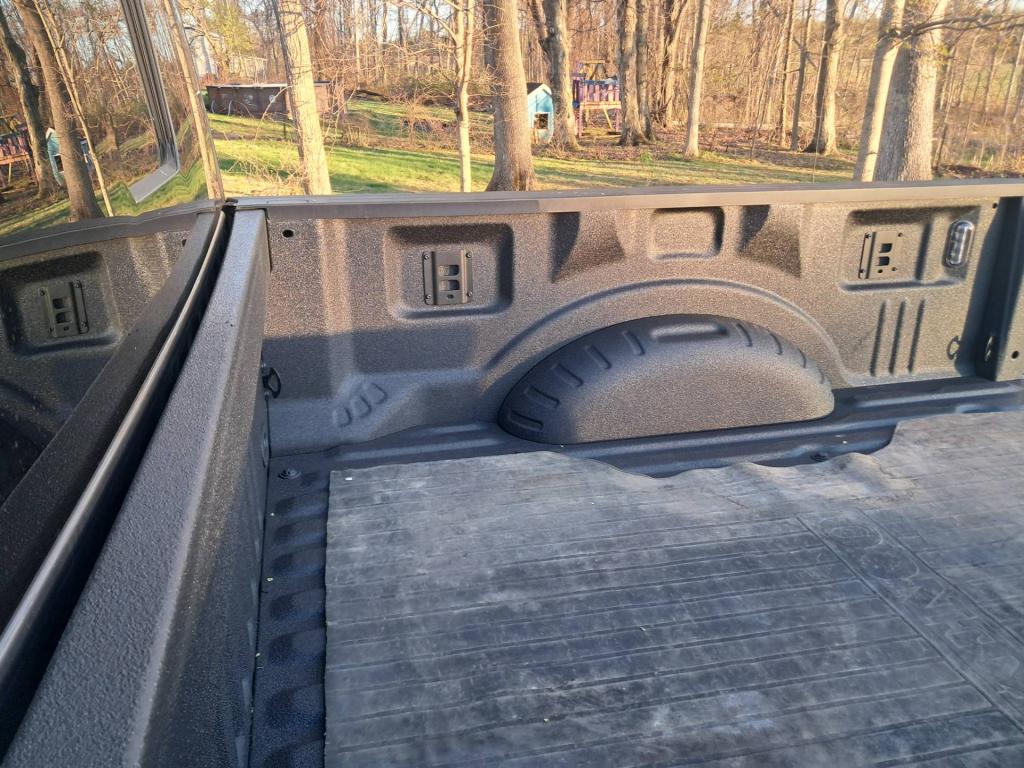
I still pretty pissed about that, especially as they told me they would remove all hardware before spraying, but from what I read that's common practice, and it's not a big deal to pull the covered bolts with a heat gun and maybe a knife and mallet. Not that I'm planning to put a gooseneck hitch there - I'm getting a camper shell in a few weeks but I wish that they had been a lot more honest about it. They did remove most of the other hardware, and it was well masked, though I do wonder if they coated the bed deep enough. Just going to push camping gear there, still I'm not happy with the shop or their answers, so I doubt they'll ever get my future business.
Bar them spraying the gooseneck and bed bolts, I am pretty happy with how the bedliner came out. Maybe it could have been sprayed a bit deeper, but they did mask the bed, lights, switches, and removed the maintance panels prior to spraying. And it wasn't super expensive at $575 plus tax, and we're able to get me in right away. The material is grippy but not harsh and rough, and will make an excellent stable surface for storing gear and supplies and camping under the shell. Still I wish they had been more transparent and honest about the bed bolts, but I also should have asked more point blank. Now just waiting on the truck cap..
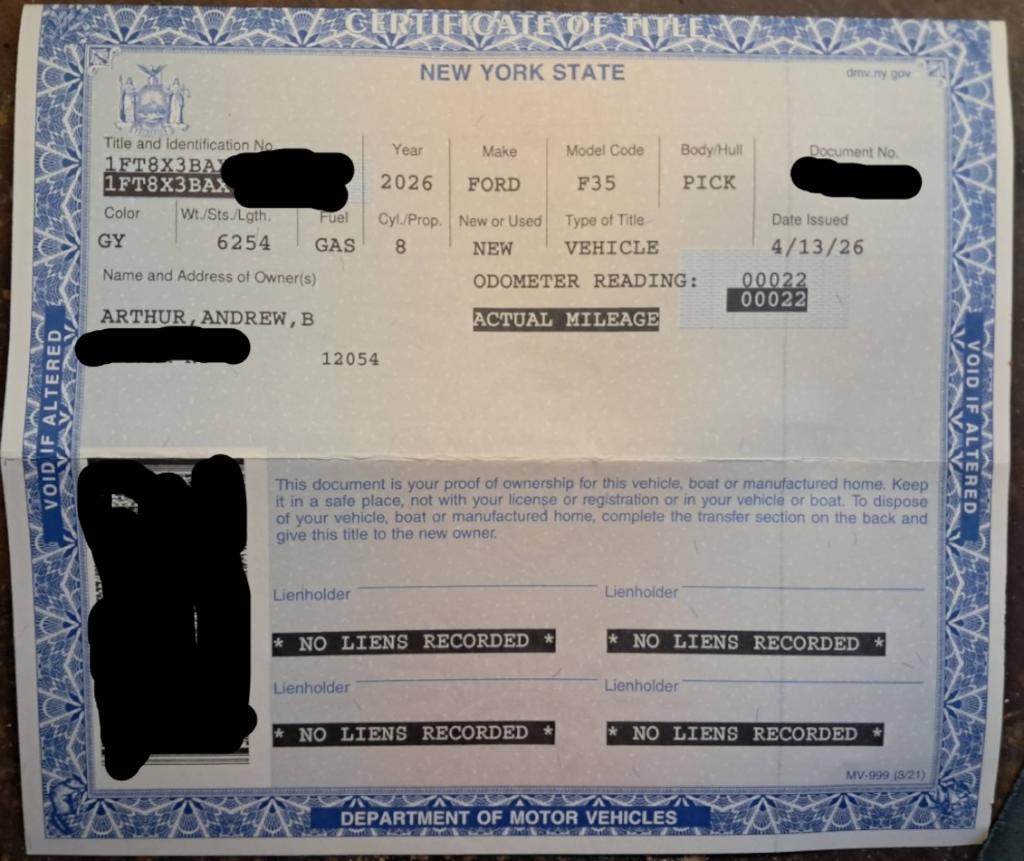
I waited for what seemed like forever for the DMV to send me the title to Old Smokey. It was so good to see the title written out correctly with my name and address, the Ford F-350 (shortened in DMV speak to F35), and No Leins Recorded, meaning only I have claim to the truck. Kind of nice to know I paid for the SuperDuty with cash, at least in my mind.
Stationary Elevated Idle Control (SEIC) is a factory-programmed powertrain control strategy used in Ford SuperDuty Trucks to increase engine RPM while the vehicle is parked.
It is primarily used to drive auxiliary equipment via a Power Take-Off (PTO) system or to protect the battery and engine during extended idling.
PTO Power: Provides the necessary engine speed to run hydraulic pumps, air compressors, or generators.
Battery Charge Protection (BCP): Automatically increases idle to maintain voltage under heavy electrical loads.
Climate Control: Improves HVAC performance in extreme hot or cold weather by increasing refrigerant and coolant flow.
Engine Protection: Prevents “wet stacking” in diesel engines by maintaining higher combustion temperatures during long idles. Also raises the oil pressure which can reduce lifter wear, especially on older 7.3 Godzill engines.
For the system to engage, the vehicle’s computer (PCM) verifies these conditions:
Parking Brake: Must be firmly applied.
Transmission: Must be in Park (or Neutral for some manual setups).
Pedals: Foot must be off the brake and accelerator.
Speed: Vehicle speed must be 0 mph.
Engine Status: Engine must be at a stable base idle; for some models, oil/coolant must be above 20°F (-6°C).
While the logic is built into the truck’s computer, you typically have to “hook it up” manually or use aftermarket kits:
Access Wires: Ford provides “blunt-cut” wires under the dashboard (near the parking brake or OBDII port) for upfitters to tap into.
Upfitter Switches: Many owners wire the SEIC request to a factory Aux switch to turn it on/off from the driver’s seat.
Resistors: By adding a specific resistor to the circuit, you can set the exact RPM target (typically between 900 and 3,000 RPM, depending on the engine).
Kits: Companies like BD Power offer plug-and-play modules that include a dial to adjust RPM on the fly.
If SEIC won’t engage or randomly kicks off, check for:
Brake Lights: A burnt-out brake light or faulty brake switch can trick the computer into thinking the pedal is pressed.
Unstable Idle: If the engine is searching for idle (due to a dirty sensor), SEIC may refuse to take over.
Transmission Temp: On newer trucks, the system won’t activate if the fluid is too cold to protect internal components.
To wire Stationary Elevated Idle Control (SEIC) on a 2026 Super Duty F-350 with a gas engine, you will need to bridge the “SEIC Request” wire to an Upfitter Switch while installing a resistor between the “Reference” and “Signal” wires.
Wire Locations
On 2023–2026 models, the required wires are split between two locations:
SEIC/PTO Bundle: Located behind the passenger-side kick panel (outboard of the fuse box). You may need to pull back the carpet and unwrap a taped bundle to find a 26-pin connector or a set of blunt-cut wires labeled “PTO”.
Upfitter (AUX) Wires: Found in the engine compartment, typically behind the battery on the passenger side, taped to the main harness near the relay box.
Wire Color Guide (Gas Engine)
The following colors are standard for the 7.3L or 6.8L gas powertrains:
Function
Wire Color
Purpose
PTO Request
Yellow / Green
Triggers the high idle when it receives 12V power.
PTO Reference
Yellow / Orange
Provides 5V output for the resistor circuit.
PTO Signal
Green
Receives the resisted voltage to set the RPM.
Pass-Thru Wires
Varies (often Brown/White)
Use these to jump power from the engine bay to the cabin.
Step-By-Step Wiring Instructions
1. Set the Fixed RPM (The Resistor)
To achieve a specific RPM, you must solder a resistor between the PTO Reference (Yellow/Orange) and PTO Signal (Green) wires in the passenger footwell.
900 RPM: ~36k Ohm
1200 RPM: ~10k Ohm (Highly recommended for cooling/charging)
1500 RPM: ~5.1k Ohm
2. Connect to the Upfitter Switch
Since your AUX switch wires are under the hood and your SEIC wires are inside the cab, you must use the Pass-Thru wires.
Under Hood: Connect your chosen Upfitter wire (e.g., AUX 1 – Green/White) to one of the blunt-cut Pass-Thru wires (e.g., Brown/White).
Inside Cab: Locate that same Brown/White wire behind the passenger kick panel.
The Trigger: Connect that Brown/White wire to the PTO Request (Yellow/Green) wire.
3. Test the System
Ensure all safety “enablers” are met: Park, Parking Brake set, and feet off all pedals. Flip your Upfitter switch; the RPM should ramp up to your preset speed within 2–3 seconds.
Pro-Tips for 2026 Models
Dual GN/WH Wires: Be careful; there are often two Green/White wires in the bundle. Ensure you are using the one designated for the Upfitter switch (check your owner’s manual for the specific AUX switch map).
Resistor Wattage: Use at least a 1/2-watt resistor to ensure it doesn’t overheat over long periods of use.
Grounding: Unlike some older diesel models, the gas SEIC circuit usually does not require a manual ground connection to the chassis, as it uses the PCM’s internal return.
Resistor Chart for Gas Engines (6.8L/7.3L)
For the 2023–2026 models, Ford’s logic follows a specific resistance-to-RPM curve. These values assume a standard 1/2-watt or 1-watt resistor.
Target RPM
Resistance (Ohms)
Common Resistor to Use
900 RPM
35,200 Ω
36k Ω
1000 RPM
21,900 Ω
22k Ω
1100 RPM
15,400 Ω
15k Ω
1200 RPM (recommended)
11,200 Ω
10k or 11k Ω
1300 RPM
8,580 Ω
8.2k Ω
1400 RPM
6,670 Ω
6.8k Ω
1500 RPM
5,240 Ω
5.1k Ω
1600 RPM
4,170 Ω
3.9k Ω
1700 RPM
3,260 Ω
3.3k Ω
2000 RPM
1,424 Ω
1.5k Ω
2400 RPM
255 Ω
270 Ω
The “Sweet Spot”: Most upfitters recommend 1200 RPM (using a 10k or 11k Ohm resistor). This provides enough speed to maximize alternator output and A/C cooling without excessive noise or fuel consumption.
Minimum Resistance: Do not use a resistor lower than 250 Ohms, as this may trigger a circuit fault in the PCM.
Resistor Quality: Use Metal Film resistors if possible; they handle the temperature swings of a vehicle cabin better than carbon-composition types.
If you don’t want a fixed speed, you can wire a 20k or 50k Ohm Potentiometer (a dial) instead of a fixed resistor.
Connect the center leg of the dial to the PTO Signal (Green).
Connect one side leg to the PTO Reference (Yellow/Orange).
Turning the dial will now allow you to sweep through the RPM range in real-time.
Everybody keeps telling me the 6′ 8″ bed on my SuperDuty is super-short. Maybe by SuperDuty standards where 8′ 2″ long beds are popular but it’s no 5′ 6″ bed found on some half tons and the 5′ bed on short bed Toyota Tacoma.
Here is a comparison of the short bed (6.75′) for the shortbed Ford F-350 and the standard bed (6.5′) for the 2011 Chevy Silverado standard bed:
Specification
2011 Chevy Silverado (Ext. Cab / 6.5′ Bed)
2017–2026 Ford F-350 (SuperCab / 6.75′ Bed)
Wheelbase
144.2 inches
148.0 inches
Overall Length
230.6 inches
231.8 inches
Bed Length
~78.8 inches
~81.9 inches
Size Gap: With the 148-inch wheelbase, the Ford is about 1.2 inches longer overall compared to the 2011 Chevy.
Bed Space: Even with a similar footprint, the Ford F-350’s “short” bed is actually about 3 inches longer than the Chevy’s standard box.
More Bed and Clearance Dimensions
Measurement
2011 Chevy Silverado (Ext. Cab / 6.5′ Bed)
2017–2026 Ford F-350 (SuperCab / 6.75′ Bed)
Bed Length (at floor)
78.9 inches
81.9 inches
Bed Width (at floor)
62.4 inches
66.9 inches
Width (between wheels)
50.6 inches
50.5 inches
Bed Depth (rail to floor)
21.0 inches
21.1 inches
MX Cap Vertical Dimensions
The A.R.E. MX Series is a “mid-rise” cap, meaning it features a sloped roof that starts at cab height and rises toward the rear. On both trucks, this design provides roughly 4 to 6 inches of additional height above the truck’s roof line. The total interior height (from bed floor to the cap’s ceiling) is significantly greater on the modern Ford F-350 because its cab and bed rails sit much higher off the floor than the 2011 Silverado.
Measurement
2011 Chevy Silverado (6.5′ Bed)
2017–2026 Ford F-350 (6.75′ Bed)
Bed Depth (Rail to Floor)
21.0 inches
21.1 inches
Cap Height (Rail to Cap Top)
~28.5 inches
~28.5 inches
Total Interior Height (Floor to Cap)
~49.5 inches
~49.6 inches
Rise Above Truck Cab Roof
+4 to 6 inches
+4 to 6 inches
Headroom vs. Cab Height: While the interior “box” height is nearly identical (~49.5 inches), the Ford F-350 feels much taller because the entire truck sits higher. An F-350 with an MX cap will typically exceed 7.5 feet (90+ inches) in total exterior height, which may prevent it from entering standard 7-foot (84-inch) residential garage doors.
Cargo Access: The MX Series on the Ford provides a larger rear door opening compared to the Chevy. Because the Ford’s cab is taller, the cap must be built taller to maintain that 4–6 inch rise, giving you a more “walk-in” feel when reaching for gear.
Aerodynamics: On both trucks, the sloped front of the MX Series is designed to reduce the “sail effect” common with high-rise toppers, though some users report a slight decrease in MPG at highway speeds.
For a 4×4 configuration, the Ford F-350 has a higher roof line relative to the bed floor than the 2011 Chevy Silverado. While the bed depth (floor-to-rail) is nearly identical for both trucks, the Ford’s cab sits taller above the bed rails.
Bed Floor to Roof Line Comparison
The following table shows the vertical distance from the bed floor to the peak of the truck’s roof.
Measurement
2011 Chevy Silverado (Extended Cab)
2017–2026 Ford F-350 (SuperCab)
Bed Depth (Floor to Rail)
21.0 inches
21.1 inches
Rail to Roof Peak
~21.5 inches
~23.0 inches
Total (Floor to Roof Line)
~42.5 inches
~44.1 inches
Total Interior Space: The Ford F-350 offers approximately 1.6 inches more vertical space from the bed floor to the top of the cab. This is often noticeable when hauling taller items that need to stay below the roof line for aerodynamic reasons.
A.R.E. MX Cap Impact: Because the A.R.E. MX Series adds about 4–6 inches of height above the cab, the total interior height from the bed floor to the peak of the cap will be roughly 48.5″ on the Chevy and 50.1″ on the Ford.
Garage Clearance: While the Ford has more room inside the bed, its total height from the ground to the roof is also much higher—often over 81 inches. Adding an MX Cap to an F-350 typically brings the total height to roughly 86–87 inches, which may exceed a standard 7-foot (84-inch) garage door.


![Untitled [Expires April 27 2026]](https://andyarthur.com//data/photo_022262_large.jpg)